 +971552579247 | Call Us: +971559994937

GPS Jamming and Spoofing: Why Timing Systems Are Facing a Serious Threat
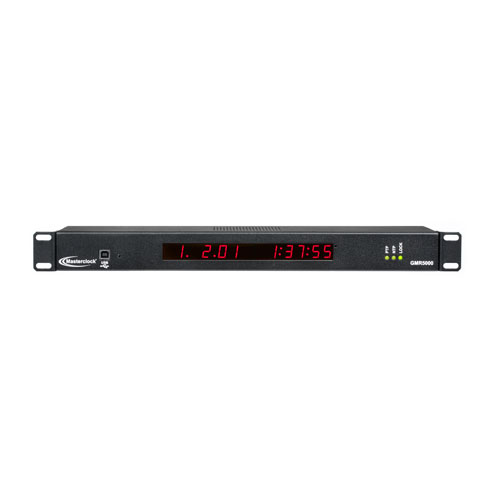
When people hear the word GPS, the first thing that usually comes to their mind is navigation. The majority of individuals imagine maps, ride-hailing applications, airplane tracking, or delivery trucks that travel through cities. However, GPS is not only used for location tracking. It also contributes significantly to timing synchronisation in various industries.
Financial institutions, telecom providers, airports, defence systems, power grids, broadcasting stations, and data centres today are dependent on accurate timing signals. Any slight timing issue can cause severe operational issues. This is precisely where GPS jamming and spoofing have become an increasing worry to organisations worldwide.
A lot of companies continue to believe that GPS systems are completely safe. Regrettably, that is no longer the case. Attackers today have access to low-cost tools that can interrupt or manipulate GPS signals without much difficulty. With industries still relying on very precise timing systems, the security of these infrastructures has never been more crucial.
In this article, we shall learn the meaning of GPS jamming and spoofing, the impact of these on timing systems, and what can be done today to mitigate these risks.
How GPS Timing Works
It is worthwhile to know why GPS timing is so important before we talk about the threats. GPS satellites are constantly sending very precise timing signals out of space. These signals are received by ground-based systems and are used to synchronise operations.
For example, telecom networks use accurate timing to manage communication between towers. Financial systems need accurate timestamps of transactions. Broadcasting networks rely on timing to ensure synchronised transmissions. Even power distribution systems need accurate timing to maintain grid stability.
Lack of proper synchronisation can cause many critical systems to begin acting in an unpredictable manner. Data packets can be received in an out-of-order manner. There can be wrong timestamps in financial records. There can be a disruption of communication systems. Even a few microseconds of error can pose operational difficulties in large infrastructures.
This dependency has made GPS timing one of the most important foundations of modern digital infrastructure.
What Is GPS Jamming?
GPS jamming occurs when a device deliberately disrupts or interferes with GPS signals. GPS signals that reach the earth are extremely weak by nature, and therefore, they can be easily distorted.
A jammer operates by sending radio signals at the same frequency as GPS systems. When this interference is stronger than the original satellite signal, the receiver is no longer able to lock onto the correct timing information.
Simply put, the GPS receiver is confused as it is unable to differentiate between the actual signal and the interference that is being produced in the vicinity.
The alarming aspect is that GPS jammers are no longer a rare and highly specialised device. There are also small jamming devices that can be purchased illegally on online markets and can interfere with nearby systems in a few seconds.
The industries that are close to ports, airports, highways, or military areas are at a greater risk since unauthorised jammers are commonly employed in such areas.
What Is GPS Spoofing?
GPS spoofing is regarded as even more harmful than jamming since the attacker does not merely block the signal. They instead substitute the actual GPS signal with a counterfeit one.
In spoofing attacks, a rogue transmitter transmits fake GPS signals to the surrounding receivers. The receiver erroneously thinks that the fake signal is real and begins to accept wrong timing or location information.
In contrast to jamming, spoofing may go unnoticed over a longer duration since the receiver is still functional. But the information received is inaccurate.
Consider a financial trading system that is fed false timestamps or a telecom network that is run on falsified synchronisation information. The systems can be left to run and generate unreliable results silently.
This renders spoofing a critical issue to mission-critical timing applications where timing accuracy directly influences reliability, security, and compliance.
The vulnerability of Timing Systems
A lot of organisations pay much attention to cybersecurity on the software level. Nevertheless, timing infrastructure is not given much attention, as it is equally important.
GPS timing systems are vulnerable because they rely on external satellite signals, which can be interrupted or manipulated before reaching the receiver. Conventional GPS receivers do not necessarily identify the authenticity of the signal being received.
The other problem is excessive reliance on one timing source. When an organisation solely depends on GPS without any backup timing systems, a minor disruption can cause operational downtime.
Some of the industries in the modern world are highly interconnected and milliseconds count. This has heightened the need to have more timing protection strategies.
The following are some of the common areas that are vulnerable to GPS:
- Mobile networks and telecommunications.
- Banking and financial trading.
- Broadcast and media activities.
- Smart grids and power generation.
- Aerospace and defence infrastructure.
The effects of timing disruption are increasingly becoming more pronounced as digital infrastructure becomes more interconnected.
The impact of GPS Jamming on industries
GPS jamming may have different impacts on different industries. In telecom networks, disrupted timing may impact network synchronisation between towers. This may decrease the quality of communication and influence the stability of data transmission.
Inaccurate timing in financial systems may cause transaction mismatch or compliance problems. The financial operations in most countries have regulatory frameworks that demand very accurate timestamps.
Power utilities are also at risk. The current smart grids rely on coordinated measurements at several substations. Timing disturbances may decrease the visibility of grid performance and make fault detection more difficult.
When timing becomes unstable, broadcasting systems can suffer delays in transmission or signal inconsistencies. Disruptions in navigation can also be experienced in airports and transportation networks.
What is more worrying is that most organisations might not realise the cause of the problem at once. GPS interference can manifest itself as unaccounted instability until further research is conducted.
The way Modern Timing Solutions minimizes risks
Luckily, the timing industry has come up with a number of technologies that aim at reducing the effects of GPS jamming and spoofing. Contemporary timing systems no longer depend on the conventional GPS reception techniques.
Multi-constellation GNSS support is one of the approaches. Advanced systems are able to receive signals from several satellite networks rather than relying solely on GPS satellites. This enhances reliability since interference on one constellation might not have the same effect on others.
The other significant enhancement is smart signal validation. Sophisticated timing systems are able to examine incoming signals to detect suspicious behaviour. In case of irregular timing patterns or signal anomalies, the system may issue alerts or reject potentially compromised signals.
Mitigation is also significantly contributed to by holdover technology. High-quality oscillators within the timing system can keep the timing correct temporarily in the event of signal disruption without instantaneous GPS input.
This enables the critical infrastructure to keep running as the problem is investigated.
The Significance of Redundant Timing Architecture
Using a single timing source is one of the greatest errors that organisations commit. In contemporary timing infrastructure, redundancy has become very significant.
Layered timing architectures are now being implemented in many enterprises that combine:
- GNSS timing systems.
- Network Time Protocol (NTP) servers.
- Precision Time Protocol (PTP) infrastructure.
- Internal oscillators and backup clocks.
- Multiple antenna configurations.
This multi-layered design minimizes the risk of complete timing failure in the case of interference.
As an example, when GPS signals are unavailable temporarily, internal oscillators can stabilize as other timing references keep operations going.
This plan enhances resilience to a great extent, particularly in industries where constant uptime is a necessity.
The importance of Monitoring and Detection
It is no longer sufficient to prevent. Organisations should also be monitored continuously to detect suspicious activity at an early stage.
Timing systems today have monitoring features that monitor signal quality, interference patterns, and synchronisation performance. These tools assist engineers in detecting abnormal behaviour before it causes significant operational problems.
Real-time alerts are particularly significant since GPS spoofing attacks can be initially perceived as normal. Early identification enables organisations to isolate infected systems promptly and minimise additional risks.
Timing infrastructure is now being given the same seriousness as cybersecurity infrastructure by many enterprises. This change of mind is becoming a necessity as digital systems become increasingly reliant on proper synchronisation.
The Future of Secure Timing Infrastructure
With the further automation of industries, the use of IoT ecosystems, smart grids, and sophisticated communication networks, timing accuracy will be even more important.
Simultaneously, the threat of GPS interference is also likely to grow. This implies that timing infrastructure is no longer a passive background component that organisations can treat.
Rather, companies need to invest in robust timing solutions that can manage contemporary interference issues. The future of trusted digital infrastructure will be largely determined by the effectiveness with which organisations secure their IT environments in the present day.
Conclusion
GPS jamming and spoofing are no longer a theoretical issue that is only discussed in defence circles. They have turned into actual operational risks to industries that require accurate timing on a daily basis.
The current businesses require stable timing solutions, smartly monitored, have backup, and are highly resistant to signal interference. With timing infrastructure still developing, the presence of reliable synchronisation systems will be essential in ensuring continuity in operations.
Empirical Testing Solutions offers high-end timing solutions that are suitable in mission-critical settings where precision, durability, and long-term dependability are still critical in day-to-day operations.
Popular Tags
Recent Blogs
- What is the Optical Spectrum Analyzer used for?
- How to choose the right splicing machine?
- How to select and use an OTDR
- What is an oscilloscope? Why is it important?
- What is a Fiber Cable blowing machine? Why is it important?
- What is a RF Spectrum Analyzer & What Does it Do?
- All You Need to Know About Cable and Antenna Analyzer
- Radio Frequency Testing – An Outline About the Basics and More
- An Overall Synopsis of 5G Network Testing
- What makes Insulation Testing such a crucial part of an electrical setup?
- Presenting an Overall Idea About Calibration of pressure instruments
- A Guide To Understand The Concept And Uses Of Master Clock
- Understanding the Role Of Fiber and Copper certifier in Testing
- Know About The Different Optical Test Equipment And Other Factors
- Vital Facts You Must Note About The Different Types Of Electrical Test Equipment
- Essentiality of Master Clocks – All You Need To Know About The Device
- Omni Channel Contact Center Everything You Need To Know About It
- All You Need To Note About OLTS & Ethernet Tester And The Testing Ways
- An Overview of HART Communication Solution And Devices
- Master clocks for Airport – All You Need To Know About The Role Of Time Servers In Airports
- Master clocks for Media Broadcasting Companies – Time Synchronization And Its Need
- Cable Blowing Machine – A Guide For Choosing The Right One And Using It Rightly
- Splicing Machines – An Overview Of the Machine And Its Technique
- All That You Need To Know And Learn About Internet Of Things - IoT
- Fiber To The Home – FTTH: Bringing Smarter Connectivity And Solutions
- Fiber To The Home – FTTH: Bringing Smarter Connectivity And Solutions
- Everything You Need To Note About The Master Clock For Banks
- Fiber Optic Cables And Passive Components – Know The Essential Aspects
- Presenting A Brief Outline For The Temperature Monitoring Solution For Data centers: DTSX
- Master Clock For Stadiums – All That You Should Know
- An Overview Of Master Clock For Universities – Know The Important Aspects
- Master Clock For Hospitals – Know Every Practical Aspect Related To Time Synchronization In Healthcare Sector
- Everything You Must Know And Note About The GNSS Simulator Solutions
- Master Clock For Surgery Centers And Clinics – The Importance of Time Accuracy and Synchronization
- Master Clock For Financial Institutes – An Overview Of The Critical Aspects
- The Importance Of Duct Integrity Testing Prior To Fiber Cable Blowing And Everything You Need To Know
- Temperature Monitoring Solution For Manufacturing Plants – How Does It Help In Minimizing The Downtime?
- Master Clocks For Data Centers – Everything You Must Know About Its Functionality
- An Overview Of Fiber Cable Monitoring And Cables – Obtain An Overall Idea
- Why Filtered 1625 nm Wavelength Is Used For Live Fiber Testing?
- An Benefits Of Network Time Protocol In Industries Where Time Is Critical
- Get An Overview Of GNSS Receiver And Its Applications
- Consistency With GNSS Simulator – Explore More On The Concept
- Master Clock - Why Synchronized Master Clock Timing Is Essential For CCTV?
- The Purpose Of Aviation Control Tower And Master Clocks Use In It
- Master Clock For Shopping Mall – Everything You Must Know About These
- Master Clock For Utilities – Know The Application Range
- Use Of Launch Boxes / Dead Zone Eliminators For OTDR Testing
- Difference Between Single Mode And Multi Mode Fiber
- Understanding Fiber Optic Testing Equipment: The UAE Standards
- Different Types of power analyzers and its application
- How to select an oscilloscope?
- Master Clock For Stock Trading – Decode The Essentiality And Utility
- Tactical Fiber Cable: Applications and Benefits
- Master Clock for Schools: Enhancing Time Management and Operational Efficiency
- Master Clock for Manufacturing Plants: Enhancing Precision and Efficiency
- The Critical Role of Master Clocks in Aviation
- The Importance of Master Clocks for Schools
- Masterclock for Healthcare: Precision, Efficiency, and Patient Safety
- Masterclock for Hospitality Industry: Enhancing Precision and Guest Experience
- Masterclock for Stock Trading: The Unsung Hero Behind Market Precision
- Optical Testing in Fiber Networks: Why It Matters More Than You Think
- Why Masterclock Systems Are Vital for Banks, Data Centers, and Disaster Recovery Rooms
- How Artificial Intelligence is Transforming Test & Measurement Solutions in the Digital Age
- Masterclock for Banks: Why It's Critical in Data Centers and Disaster Recovery Rooms
- Masterclock for Banks: Why It's Critical in Data Centers and Disaster Recovery Rooms
- Top Generative AI Trends Shaping 2025
- Securing Time Protocols: Mitigating Spoofing and Malicious Inputs
- Building a Trusted Master Clock: From GPS to GNSS Redundancy
- Broadcast Timing Standards: Why Masterclock Still Matter in the IP Era
- Energy and Utility Sector: The Hidden Risk of Poor Time Synchronization
- Masterclock Systems for Broadcast Facilities — Keeping Every Frame in Sync
- Why Accurate Time Is Critical for TV and Radio Channels
- Boosting Healthcare Reliability with Precise Timekeeping Systems
- Smart Campuses in UAE: How Synchronized Clocks Improve Learning and Administration
- How Masterclock Synchronization Improves Airport Operations in the Gulf
- Why Time Synchronization is Critical for Banks and Financial Networks in the Middle East