 +971552579247 | Call Us: +971559994937

Masterclock Systems for Broadcast Facilities — Keeping Every Frame in Sync
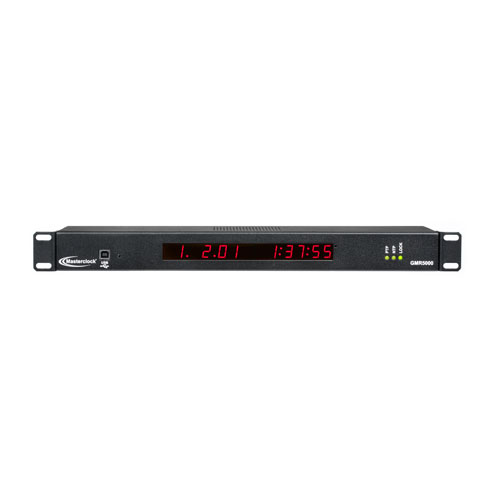
Broadcasting depends on one principle. Every device must follow one time. Every frame must follow one reference. Every action must follow one schedule. Nothing in a broadcast facility works without this foundation.
A viewer may watch a live match. A listener may tune in for hourly news. The content may run through fibre networks. The content may run through satellites. The content may run through cloud playout. Yet the requirement remains the same. Every frame must start and stop at the exact second written in the playlist. That precision is not optional. It is the core of broadcast synchronization.
Broadcast Plants Depend on One Timing Source
A broadcast plant contains many systems. These include playout engines along with monitoring walls and ingest servers. They also include graphics generators along with transcoders and uplink chains. Each system has its own processor. Each system has its own buffer. Each system operates at its own speed. None of them can stay aligned without a master reference.
The master clock forms that reference. It feeds time pulses to every device. These pulses may travel through coaxial lines. They may travel through fibre. They may travel through IP packets.
Each device locks itself to this signal. Once locked, every process in the chain follows one unified timeline.
SMPTE Standards Define the Timing Structure
Broadcast timing follows SMPTE rules. These standards guide the rate of frames. They guide the structure of timecodes. They guide the behaviour of sync pulses. SMPTE timecodes carry frame numbers. These frame numbers define the identity of every video frame.
Each frame knows its position on the timeline. Each audio packet knows its entry point. Each transition knows when to activate. If one frame arrives a fraction late, the chain begins to slip. That slip leads to jitter. That jitter leads to dropouts. Dropouts lead to visible faults. Broadcast synchronization eliminates such faults.
NTP Offers Network-Level Time Discipline
Many broadcast systems depend on Network Time Protocol. NTP distributes time across large networks. It allows servers to read time from a reference source. That reference may be GPS-based. That reference may be an atomic input. That reference may reach the facility through radio signals.
NTP keeps servers aligned to the same second. This is useful for file-based workflows. It helps editors access correct time stamps. It helps asset managers track ingest logs. It helps compliance teams verify playout history. It does not offer sub-millisecond precision. For many tasks, that precision is required.
PTP Creates Sub-Millisecond Alignment for Broadcast
Modern broadcast plants operate on IP infrastructure. These plants use Precision Time Protocol. PTP keeps all IP devices locked to a grandmaster clock. This clock distributes timing packets through the network. Switches read these packets. Encoders read these packets. Multiviewers read these packets. Each one adjusts its internal time accordingly.
PTP creates microsecond precision. This means audio packets arrive in sync with video frames. It means lip sync remains stable. It means graphics insertion is accurate. It means multi-camera switching functions without glitches. Without PTP, IP-based broadcast systems become unreliable.
Masterclock Systems Protect Against Drift
Every clock drifts. Atomic-grade oscillators drift even. A masterclock system corrects this drift. It is kept in touch with an external reference. It assigns periodic pulses to dependent devices. It checks its stability. It also switches to backup sources when it is required. It maintains the integrity of timing in every situation.
Drift ruins broadcast quality. Drift breaks frame alignment. Drift causes switches to trigger at the wrong second. Drift creates mismatched timestamps in recorded content. Drift results in compliance violations. Masterclocks eliminate drift across the entire broadcast chain.
Ingest and Playout Cannot Function Without Accurate Time
Ingest servers record content with timecodes. These timecodes identify when the clip was created. Playout servers need these labels. They use these labels to cue assets. A clip may be scheduled at a specific second. The server must fire the clip at that exact second.
If the time reference is wrong, the clip triggers early. Or it triggers late. Or it overlaps the next element. The viewer sees this failure immediately. The advertiser sees this failure in the audit logs. Time accuracy is the only safeguard.
Live Production Requires Zero Loss of Sync
Live production rooms depend on timing more than any other part of the facility. Multi-camera feeds must match. Live audio must match the video. Replay systems must follow the event clock. Scoring systems must use the same reference. The director calls cuts based on real-world time. The system must follow that time.
If one camera drifts from the time source, the switcher rejects the feed. If the audio console drifts, lip sync breaks. If the replay engine drifts, it loads the wrong segment. Masterclock systems prevent such breakdowns.
Distribution Requires Exact Timing for Every Packet
Once the content leaves the studio, it moves into distribution. The content may travel through satellite uplink. It may travel through fibre headends. It may travel through OTT networks. Each path involves packetisation. Each packet carries timing information.
Packet timing must follow the original reference. If the packet timing is wrong, the decoder cannot rebuild the picture. The viewer sees mosaic artifacts. The viewer hears pops in the audio. These issues come from timing faults. Masterclocks keep packet timing stable.
Broadcast Synchronization Ensures Clean Ad Insertion
Ad insertion depends on cue tones and markers. These markers trigger SCTE events. These events must fire at the exact second. Advertisers depend on this accuracy. A delay of even two seconds becomes a contractual breach. A premature trigger becomes a lost placement. A lost placement becomes a revenue loss.
Ad servers use timestamps to validate accuracy. Compliance systems read the same timestamps. If timestamps are wrong, every report becomes invalid. Masterclock systems prevent such failures.
Timing Also Drives Regulatory Compliance
Broadcast authorities request accurate logs. These logs prove when content went on air. These logs prove how long each segment played. These logs prove whether deadlines were honoured. If the timestamps do not match the legal reference, the broadcaster faces penalties.
Masterclock systems produce legal timestamps. They confirm accurate operation of every device. They create audit trails that cannot be disputed.
GCC Broadcasters Need High-Precision Masterclock Solutions
The GCC region uses advanced playout centres. These centres support multi-channel streams across satellite networks. They rely on IP-based contribution. They rely on hybrid cloud workflows. They rely on remote production. Every model requires stable time.
A Masterclock in UAE must support PTP networks. It must support NTP layers. It must support GPS references. It must support redundant architecture. It must protect broadcast timing against local disturbances. Without such systems, the broadcast chain becomes unreliable.
Conclusion
Broadcast synchronization is the backbone of every channel. Time defines the start of every frame. Time defines the flow of every programme. Time defines the structure of every workflow. Masterclock systems give broadcasters the precision required to deliver clean signals. Masterclock systems keep every component aligned from ingest to playout. Masterclock systems remove drift and prevent errors.
Empirical Testing Solutions assists in satisfying this requirement by providing high-end timing validation and broadcast-quality test systems. Their experience helps the broadcasters to make sure that all the devices are conversing at the same time. Their work ensures that every frame on air is aligned to the reference. Trust is built through accuracy in broadcasting. Reliability begins with right time.
Popular Tags
Recent Blogs
- What is the Optical Spectrum Analyzer used for?
- How to choose the right splicing machine?
- How to select and use an OTDR
- What is an oscilloscope? Why is it important?
- What is a Fiber Cable blowing machine? Why is it important?
- What is a RF Spectrum Analyzer & What Does it Do?
- All You Need to Know About Cable and Antenna Analyzer
- Radio Frequency Testing – An Outline About the Basics and More
- An Overall Synopsis of 5G Network Testing
- What makes Insulation Testing such a crucial part of an electrical setup?
- Presenting an Overall Idea About Calibration of pressure instruments
- A Guide To Understand The Concept And Uses Of Master Clock
- Understanding the Role Of Fiber and Copper certifier in Testing
- Know About The Different Optical Test Equipment And Other Factors
- Vital Facts You Must Note About The Different Types Of Electrical Test Equipment
- Essentiality of Master Clocks – All You Need To Know About The Device
- Omni Channel Contact Center Everything You Need To Know About It
- All You Need To Note About OLTS & Ethernet Tester And The Testing Ways
- An Overview of HART Communication Solution And Devices
- Master clocks for Airport – All You Need To Know About The Role Of Time Servers In Airports
- Master clocks for Media Broadcasting Companies – Time Synchronization And Its Need
- Cable Blowing Machine – A Guide For Choosing The Right One And Using It Rightly
- Splicing Machines – An Overview Of the Machine And Its Technique
- All That You Need To Know And Learn About Internet Of Things - IoT
- Fiber To The Home – FTTH: Bringing Smarter Connectivity And Solutions
- Fiber To The Home – FTTH: Bringing Smarter Connectivity And Solutions
- Everything You Need To Note About The Master Clock For Banks
- Fiber Optic Cables And Passive Components – Know The Essential Aspects
- Presenting A Brief Outline For The Temperature Monitoring Solution For Data centers: DTSX
- Master Clock For Stadiums – All That You Should Know
- An Overview Of Master Clock For Universities – Know The Important Aspects
- Master Clock For Hospitals – Know Every Practical Aspect Related To Time Synchronization In Healthcare Sector
- Everything You Must Know And Note About The GNSS Simulator Solutions
- Master Clock For Surgery Centers And Clinics – The Importance of Time Accuracy and Synchronization
- Master Clock For Financial Institutes – An Overview Of The Critical Aspects
- The Importance Of Duct Integrity Testing Prior To Fiber Cable Blowing And Everything You Need To Know
- Temperature Monitoring Solution For Manufacturing Plants – How Does It Help In Minimizing The Downtime?
- Master Clocks For Data Centers – Everything You Must Know About Its Functionality
- An Overview Of Fiber Cable Monitoring And Cables – Obtain An Overall Idea
- Why Filtered 1625 nm Wavelength Is Used For Live Fiber Testing?
- An Benefits Of Network Time Protocol In Industries Where Time Is Critical
- Get An Overview Of GNSS Receiver And Its Applications
- Consistency With GNSS Simulator – Explore More On The Concept
- Master Clock - Why Synchronized Master Clock Timing Is Essential For CCTV?
- The Purpose Of Aviation Control Tower And Master Clocks Use In It
- Master Clock For Shopping Mall – Everything You Must Know About These
- Master Clock For Utilities – Know The Application Range
- Use Of Launch Boxes / Dead Zone Eliminators For OTDR Testing
- Difference Between Single Mode And Multi Mode Fiber
- Understanding Fiber Optic Testing Equipment: The UAE Standards
- Different Types of power analyzers and its application
- How to select an oscilloscope?
- Master Clock For Stock Trading – Decode The Essentiality And Utility
- Tactical Fiber Cable: Applications and Benefits
- Master Clock for Schools: Enhancing Time Management and Operational Efficiency
- Master Clock for Manufacturing Plants: Enhancing Precision and Efficiency
- The Critical Role of Master Clocks in Aviation
- The Importance of Master Clocks for Schools
- Masterclock for Healthcare: Precision, Efficiency, and Patient Safety
- Masterclock for Hospitality Industry: Enhancing Precision and Guest Experience
- Masterclock for Stock Trading: The Unsung Hero Behind Market Precision
- Optical Testing in Fiber Networks: Why It Matters More Than You Think
- Why Masterclock Systems Are Vital for Banks, Data Centers, and Disaster Recovery Rooms
- How Artificial Intelligence is Transforming Test & Measurement Solutions in the Digital Age
- Masterclock for Banks: Why It's Critical in Data Centers and Disaster Recovery Rooms
- Masterclock for Banks: Why It's Critical in Data Centers and Disaster Recovery Rooms
- Top Generative AI Trends Shaping 2025
- Securing Time Protocols: Mitigating Spoofing and Malicious Inputs
- Building a Trusted Master Clock: From GPS to GNSS Redundancy
- Broadcast Timing Standards: Why Masterclock Still Matter in the IP Era
- Energy and Utility Sector: The Hidden Risk of Poor Time Synchronization
- Energy and Utility Sector: The Hidden Risk of Poor Time Synchronization